By Jennie, Nimblelimbs
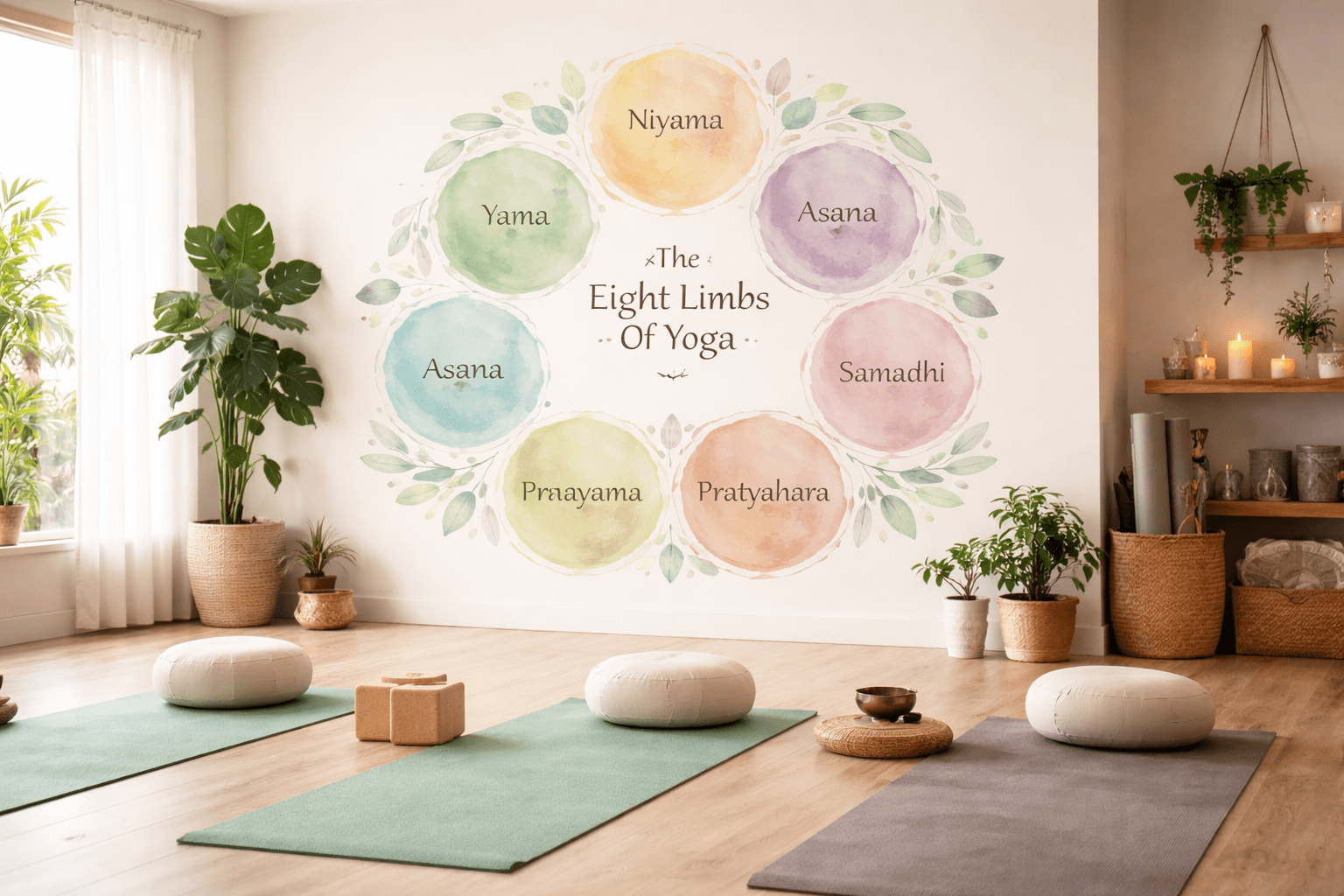
When most people hear the word yoga, they picture poses on a mat. But yoga is far more than physical movement. Rooted in ancient wisdom, the eight limbs of yoga offer a practical roadmap for living with clarity, purpose, and ease—both on and off the mat.
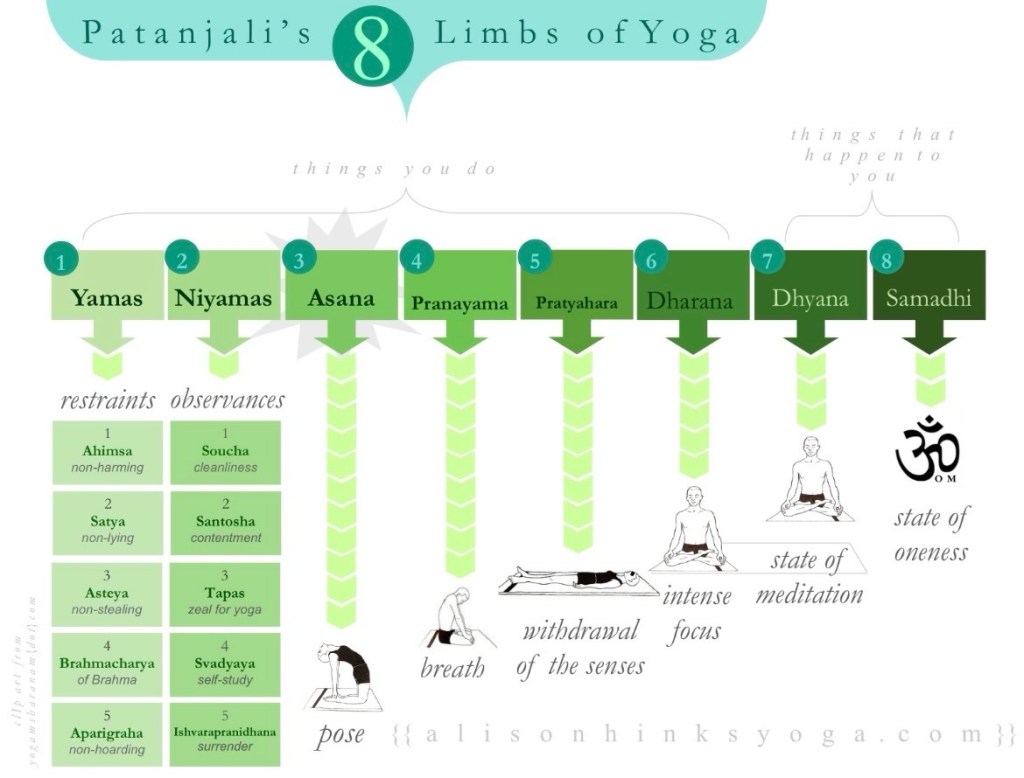
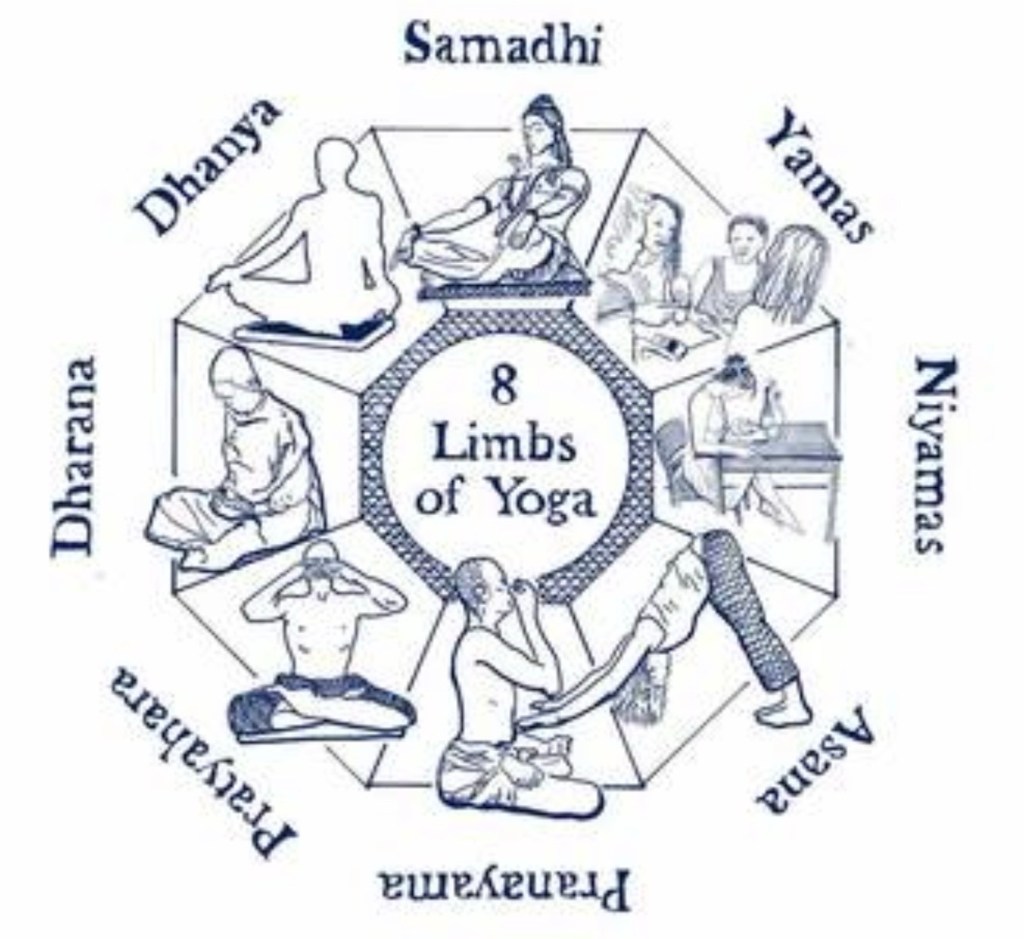
The journey begins with Yama, ethical guidelines that shape how we relate to the world. These include kindness, honesty, moderation, and non-grasping. Yama asks us to pause and consider how our actions affect others.
Next comes Niyama, personal observances that turn our attention inward. Practices like self-discipline, contentment, and self-study help us build a steady inner foundation, even when life feels messy.
The third limb, Asana, is the physical practice many of us know best. Postures are designed not just to build strength and flexibility, but to prepare the body for stillness and awareness.
From there, yoga moves into the subtler layers. Pranayama, or breath regulation, teaches us to work with our energy and nervous system. A few mindful breaths can change how we feel in a powerful way.
Pratyahara is the bridge between outer and inner practice. It’s about gently withdrawing from sensory overload and learning to rest our attention within—a skill that’s increasingly valuable in a noisy world.
The final three limbs describe deeper states of focus and awareness. Dharana is concentration, the ability to hold attention on one point. Dhyana is meditation, when focus becomes effortless and continuous.
Finally, Samadhi is a state of deep integration, where the sense of separation softens and we feel connected to something larger than ourselves.
At Nimblelimbs, we see the eight limbs as a living system, not a checklist. You don’t have to “master” one before exploring another. Each limb supports the rest, inviting us to move through life with more balance, compassion, and presence—one mindful step at a time.
 Nimblelimbs