Music often finds its way into yoga—whether through a calming playlist at home, carefully chosen tracks in a studio, or chanting in traditions like Kundalini. It’s worth remembering, though, that playing music in yoga classes is a modern-day occurrence. Traditionally, yoga was practiced in silence, with the breath as the primary rhythm. Today, sound has become another tool—one that can transform the atmosphere, support meditation, and encourage healing.
I recently attended a workshop combining restorative yoga with sound therapy. Tibetan bowls, chimes, and chanting opened the class, while a tuning fork closed Shavasana with gentle vibrations near each participant’s ears. The experience showed me how music isn’t just background—it can shape the practice itself.
Music can soothe, uplift, and focus the mind, but it can also challenge us. A song that resonates one day may feel irritating the next. Often, that reaction says more about our inner state than the artist’s intention. In this way, music becomes a mirror. It reflects where we feel open and where we resist, inviting us to notice, question, and soften. Like the breath or the body, music can become another teacher on the mat.
Whether or not to use music is personal. Some find silence unsettling and welcome sound as an anchor; others prefer quiet to connect inward. Both can be powerful. Practically, music also helps with pacing—a ten-minute track can hold the space for Shavasana, or an instrumental score can guide the flow of movement.
There are so many artists to choose from: Sigur Rós, Florence + The Machine for soaring energy, Coldplay or Kae Tempest’s spoken-word tracks for reflection, or Moby’s Long Ambients for stillness. Nature-inspired sounds—waves, rainfall, birdsong—Nils Frahm, Jónsi, Julianna Barwick, Kaitlyn Aurelia Smith and Medwyn Goodall to name a few.
All music, all sounds have the power to create resonance or resistance within us, reminding us again that our response often reveals more about ourselves than the music itself.
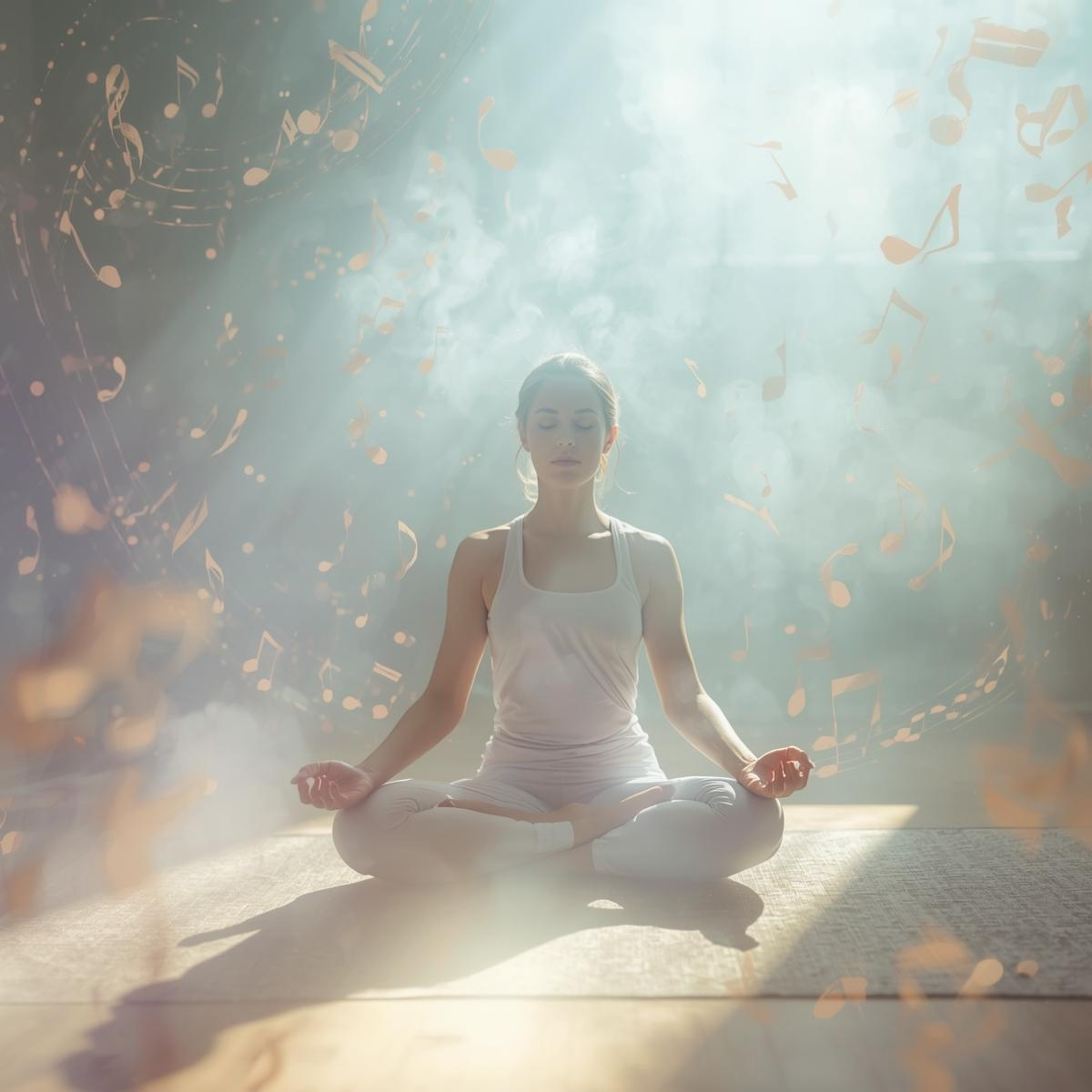
When chosen with care, music in yoga supports both resonance and resistance. It can calm, energize, or stir emotion, depending on where we are in the moment. Listening deeply, we discover that music—like yoga—is not only personal but also shared: a modern addition that has become another teacher, helping us meet ourselves exactly as we are.
 Nimblelimbs